






















Device binding: the primitive nobody markets

Device binding: the primitive nobody markets
Device binding is the least-marketed authentication factor in the network-API catalogue. Silent auth gets the conference talks. SIM swap detection gets the trade-press coverage. Device binding does the same work both of them do (proving possession of a specific enrollment state) and almost nobody builds a product page around it. The reason is that the primitive is harder to explain in one sentence, and the accurate version of that sentence has more caveats than marketing copy usually carries.
This post lays out what device binding actually proves, why the IMEI is not the authentication factor it sometimes gets sold as, what a controlled-study measurement of the primitive's effectiveness looks like, and how to think about it in the presence of eSIM, dual-SIM handsets, and device resale.
What device binding means at the network layer
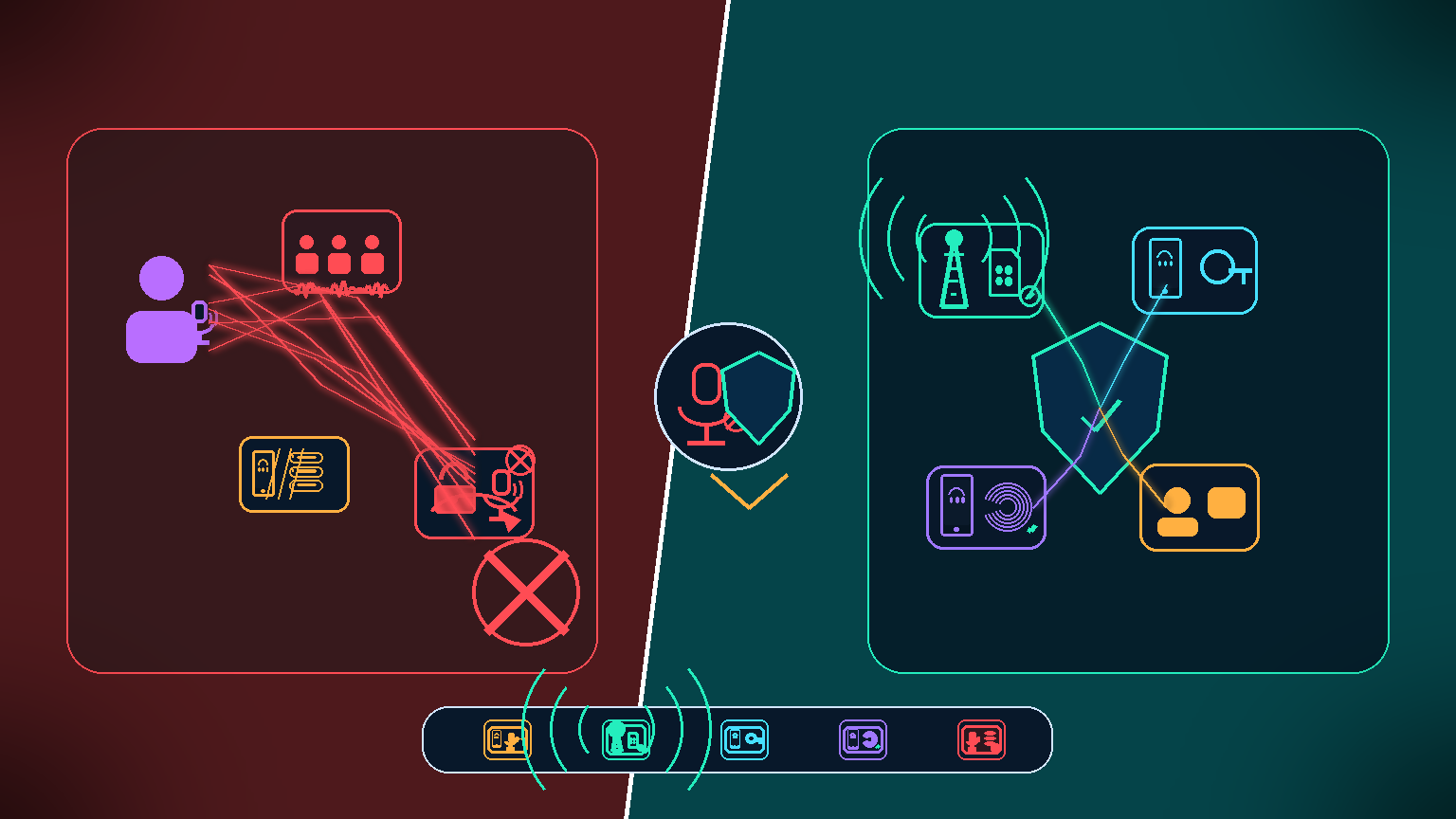
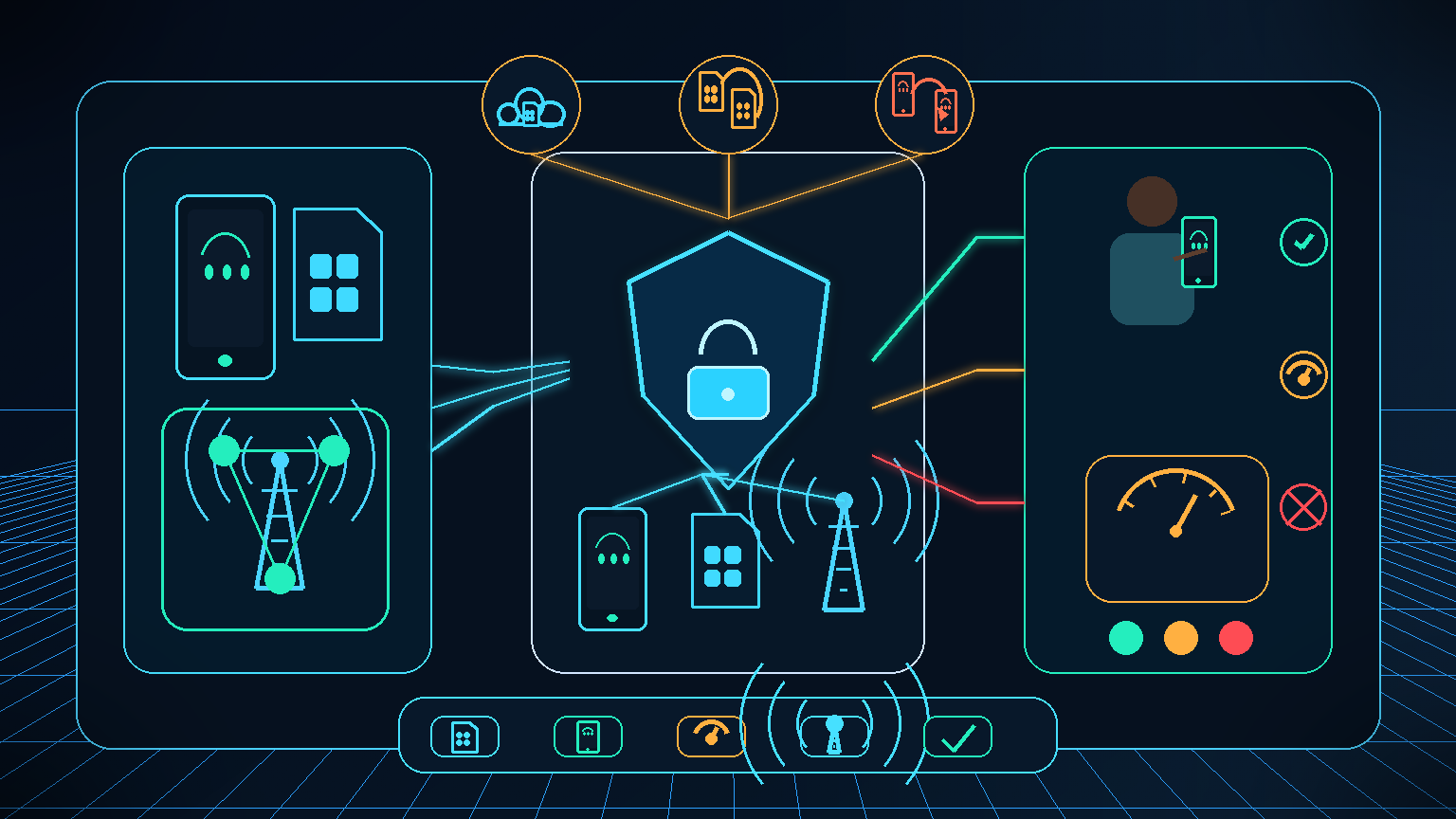
Device binding is the pairing of a subscriber account to a specific device identifier plus the SIM currently installed in that device. The pairing sits in the operator's subscriber-state data and the device's identity registers. When an authentication flow asks "is this the same device as last time, with the same SIM, in an active network registration?", the question resolves at the operator side against three values: the IMEI reported at attach, the IMSI bound to the MSISDN at the HSS, and the registration state in the MSC or MME.
The strength of the primitive comes from the joint match across IMEI, IMSI, and registration, not from any single value being unforgeable. The tuple is substantially harder to forge than any one element. An attacker who has cloned the IMEI but does not have the SIM fails the tuple check. An attacker who has ported or swapped the SIM but is using a different device fails the tuple check. An attacker who has both cloned the IMEI and acquired the SIM but is not registered on the network fails the tuple check.
The product claim worth making is precisely "(IMEI, SIM, registration) match the enrollment." Anything looser starts to drift from what the underlying signals actually prove.
Why the IMEI alone is not the factor
IMEI cloning is documented, sold as a service, and inexpensive. Hardware flashers and software tools manipulate IMEI at the radio-firmware layer, and rogue devices with cloned or illegal IMEIs are used in fraud, illegal-service-resale, and signalling-based attacks. The GSMA and national Equipment Identity Registers maintain blacklists of rogue IMEIs, and operators query those lists at device attach, but enforcement is uneven across jurisdictions.
Treating the IMEI as a standalone authentication factor means depending on an identifier that can be copied at ordinary retail costs. The literature on device-identity design consistently recommends against this framing. A survey of approaches to IMEI tampering and cloning recommends life-cycle security, challenge-response in hardware, and centralised EIR lookups, which together describe defence in depth rather than reliance on the identifier by itself. A review of IMEI-in-authentication models for online banking notes that the measurable security gain comes from including IMEI in a multi-factor scheme, not from using it as an authentication primitive on its own.
The framing that holds up: IMEI is a binding signal, not an identity. The value is in detecting a mismatch between the IMEI at authentication and the IMEI at enrollment, given the same SIM and the same account. If the two do not agree, something changed (a new handset, a cloned IMEI on a different device, a factory reset), and the authentication flow should treat the change as a ranking feature for risk.
What controlled-study measurement looks like
The academic literature includes at least one credible controlled study of a device-binding scheme in production-adjacent conditions. The SectraBank model, studied with 50 users in Peruvian banking contexts, combined IMEI, fingerprint biometric on the device, and geolocation. The combined scheme mitigated 98 percent of SIM-swap attacks and 88 percent of fake-app attacks in the controlled setup. Ninety-eight percent of participants said they would adopt the scheme.
The numbers are specific enough to cite but narrow enough to caveat. Fifty users is a small sample. The attacks were controlled rather than live adversaries. The banking context is specific to a single institutional implementation. What the paper establishes is that a tuple-based approach (device identifier plus SIM plus a second user-presented factor) can substantially reduce SIM-swap attack success, and that users are willing to accept the friction.
The paper does not establish that 98 percent mitigation generalises to all SIM-swap attack populations, or that 88 percent of all fake-app attacks would be caught in the wild. Citing the 98 percent figure responsibly means keeping the controlled-study context intact, naming the sample size, and resisting the move to generalise.
Edge cases: eSIM, dual-SIM, and device resale
eSIM changes the calculus for device binding because the SIM is no longer physically transported between devices. A subscriber upgrading to a new handset can transfer their eSIM profile over-the-air, which means the "same SIM, different device" state is more common than it was with physical SIMs. The implication for binding is that an eSIM-enabled device change is a more frequent legitimate event, which raises the base rate of legitimate binding-violation signals. A scheme that treats every binding violation as high risk will generate proportionally more false positives in an eSIM-heavy market. The mitigation is to retune the risk model on data from the market in question, and not assume thresholds calibrated for physical-SIM environments transfer.
eSIM also changes the enrollment step. Because eSIM provisioning happens over a provisioning server, the moment at which the device-SIM pair was formed is auditable in a way that physical SIM issuance often is not. A device-binding flow that captures the eSIM provisioning timestamp has a stronger "when the enrollment happened" signal than one that only has a first-attach timestamp.
Dual-SIM devices hold two IMSIs concurrently. The authentication flow needs to be explicit about which IMSI the binding applies to. A device bound to the SIM in slot 1 that subsequently moves its active-data SIM to slot 2 will fail a naive binding check even though nothing fraudulent happened. Responsible implementations either bind to the device-account pair without regard to slot, or bind to a specific slot and expose the slot in the API so integrators know what they are comparing. Collapsing the distinction is a source of silent false positives.
Device resale is the single hardest case for device binding to handle cleanly. A legitimate user sells their phone, factory-resets it, and buys a new one. The buyer now holds a device with the original user's stored account binding no longer active. If the original user attempts to re-authenticate from their new device, the binding system sees a device change and flags it. If the buyer attempts to set up their own account, the device has no prior binding, which is a normal state. Both flows are legitimate, and both look similar in the binding-state log. Discriminating them requires additional signals like account tenure, the presence or absence of a "new device enrollment" action in a reasonable window, and the match or mismatch of the SIM. A pure binding check will always have some ambiguity in the resale corner.
The design response is to build the binding check as a ranking feature rather than a hard gate, with a clearly scoped recovery flow for legitimate device changes and a step-up factor for the ambiguous cases. Published work on device-binding schemes consistently recommends this composition approach rather than single-signal enforcement.
When binding earns its place, and when it doesn't
Three cases where device binding earns its place in the authentication stack.
High-value transactions on consumer devices: an account-takeover attacker holding a swapped SIM and a stolen password still fails a binding check because they are not using the enrolled device. The measured 98 percent SIM-swap mitigation in the SectraBank study is the specific claim supporting this case. Pair binding with silent auth and the combined surface tightens further.
Reduction of push-fatigue exposure: applications that use push 2FA can use a successful binding check to suppress the push prompt in low-risk scenarios, reducing exposure to push-fatigue attacks without reducing coverage.
Enrollment-to-step-up routing: a binding violation is a useful feature in a risk model that routes some transactions to step-up authentication. The binding signal's value is in its composability, not in any single decision.
Three cases where device binding is the wrong answer.
B2B applications with high device-turnover: field-service teams, contract workers, and shared-device environments produce a high legitimate rate of device changes. The binding signal becomes a constant false positive and a support cost.
Applications without a clear enrollment moment: device binding depends on a point in time where the device was trusted. If the flow cannot define that moment, because user sign-up happens on a web page and the device is enrolled lazily on first mobile visit, the binding is technically possible but semantically weak.
Single-factor use: a relying party using device binding as the only authentication factor is in the same place as a relying party using IMEI as the only factor. The primitive is designed for composition, and a single-factor deployment loses the property that gave it security in the first place.
How TensorAuth ships device binding
TensorAuth Device Binding returns a structured response: whether the IMEI is present on the EIR blacklist, whether the IMEI matches the last-known-registration IMEI for the bound account, and the timestamp of the most recent change. The response is structured rather than scored because the product principle is signal, not verdict. The relying party knows their application and their fraud model, so the API returns the facts that feed into it.
Jurisdictional coverage for EIR blacklist resolution is published. Not every jurisdiction has a centralised EIR available for query, and accurate coverage data separates the regions where Tensormobile holds authoritative data from the regions where it relies on GSMA databases and best-effort federation.
Device Binding is not a standalone SKU. It is an extension of TensorAuth silent auth for integrators who want the joint (SIM, device, registration) tuple rather than just the SIM-plus-registration pair that silent auth resolves. For integrators who only need silent auth, adding binding is an opt-in. For integrators facing the fraud surfaces where binding measurably helps, the addition is the difference between the published 98 percent SIM-swap mitigation in the SectraBank study and the silent-auth-alone baseline.
Device binding stays under-marketed because the accurate description has caveats. The primitive tightens the SIM-swap and account-takeover surfaces measurably when composed with silent auth and a risk model. Standalone deployments lose most of that benefit. For integrators who plan to compose, device binding is one of the more useful primitives in the catalogue.