









How silent network authentication actually works (and where it fails)
How silent network authentication actually works (and where it fails)
Silent network authentication is the most over-marketed primitive in mobile identity. Vendors describe it as a one-tap confirmation of the user's phone number with no code and no friction. Under that description is a specific protocol exchange that either runs to completion or does not. When it does not, the application falls back to SMS one-time password, email magic link, or a manual step, and the user experience degrades exactly as much as the failure hides. This post describes the mechanism, the three failure modes, and the language an engineering team should use when presenting silent auth in production.
What the network actually proves
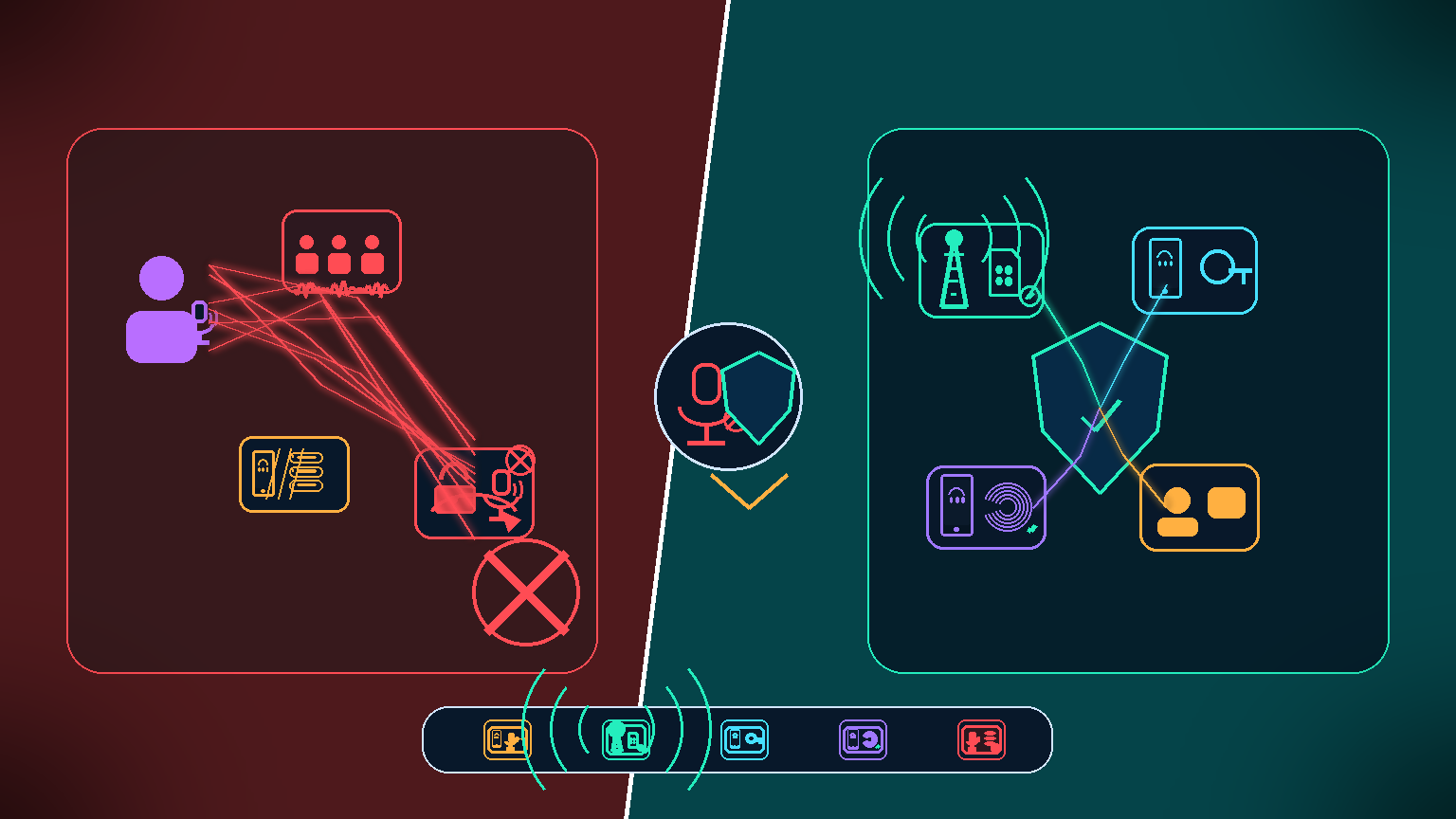
Silent authentication, branded variously as GSMA Mobile Connect, CAMARA Number Verification, or operator-specific "one-tap" products, asks the mobile network operator to confirm that the device initiating an HTTP request is the device currently registered on the carrier network under a specific MSISDN. The confirmation is produced at the signalling layer, not over the SMS channel, which is why it is "silent": the end user sees no code, and the MSISDN never travels across a potentially compromised delivery path.
The mechanism leans on an authentication event that has already happened. When a handset attaches to a mobile network, it performs the Authentication and Key Agreement exchange (EPS-AKA on LTE, 5G-AKA on standalone 5G, the older UMTS-AKA variant on 3G). That exchange proves the SIM holds a shared secret with the operator's Authentication Centre, and it is the moment the subscriber becomes authenticated to the network. Silent authentication binds an external API request to this already-completed exchange. The MNO has no reason to re-prove identity; it reports what it already knows.
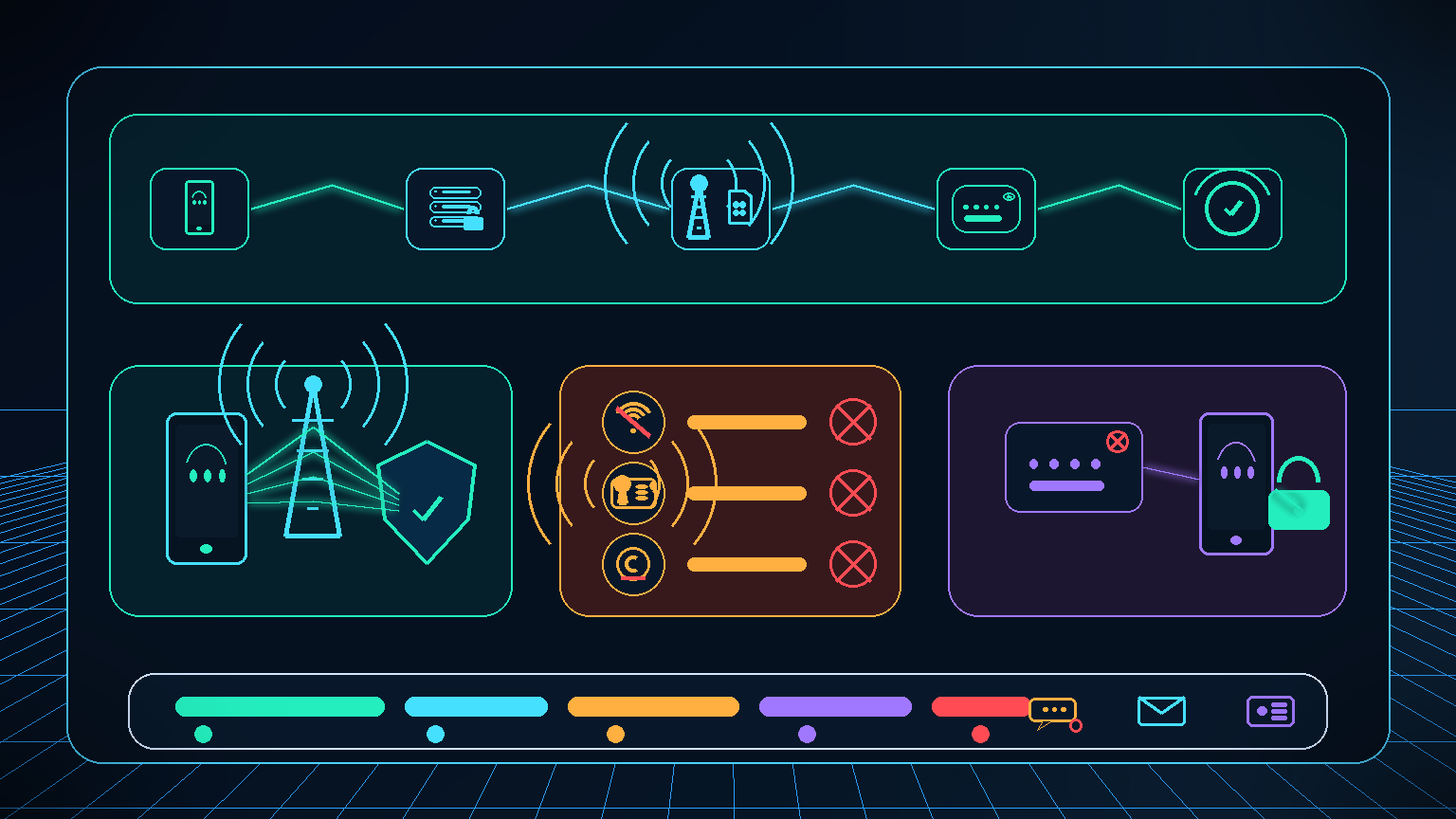
The practical flow looks like this. The relying party, typically a fintech application, initiates an OAuth or OpenID Connect authorisation request to the operator-side authorisation server. The authorisation server receives the request and identifies the MSISDN associated with the device that is currently transmitting from the cellular data session at the source IP. Source-IP resolution is possible because the operator owns the GGSN/PGW and sees which subscriber is using which private-address mobile session. The authorisation server checks that the IMS registration for that subscriber is active, issues an ID token bearing the MSISDN claim, and returns it to the relying party.
The ID token is a short-lived JWT. The relying party validates it and treats the MSISDN it contains as verified.
The three failure modes
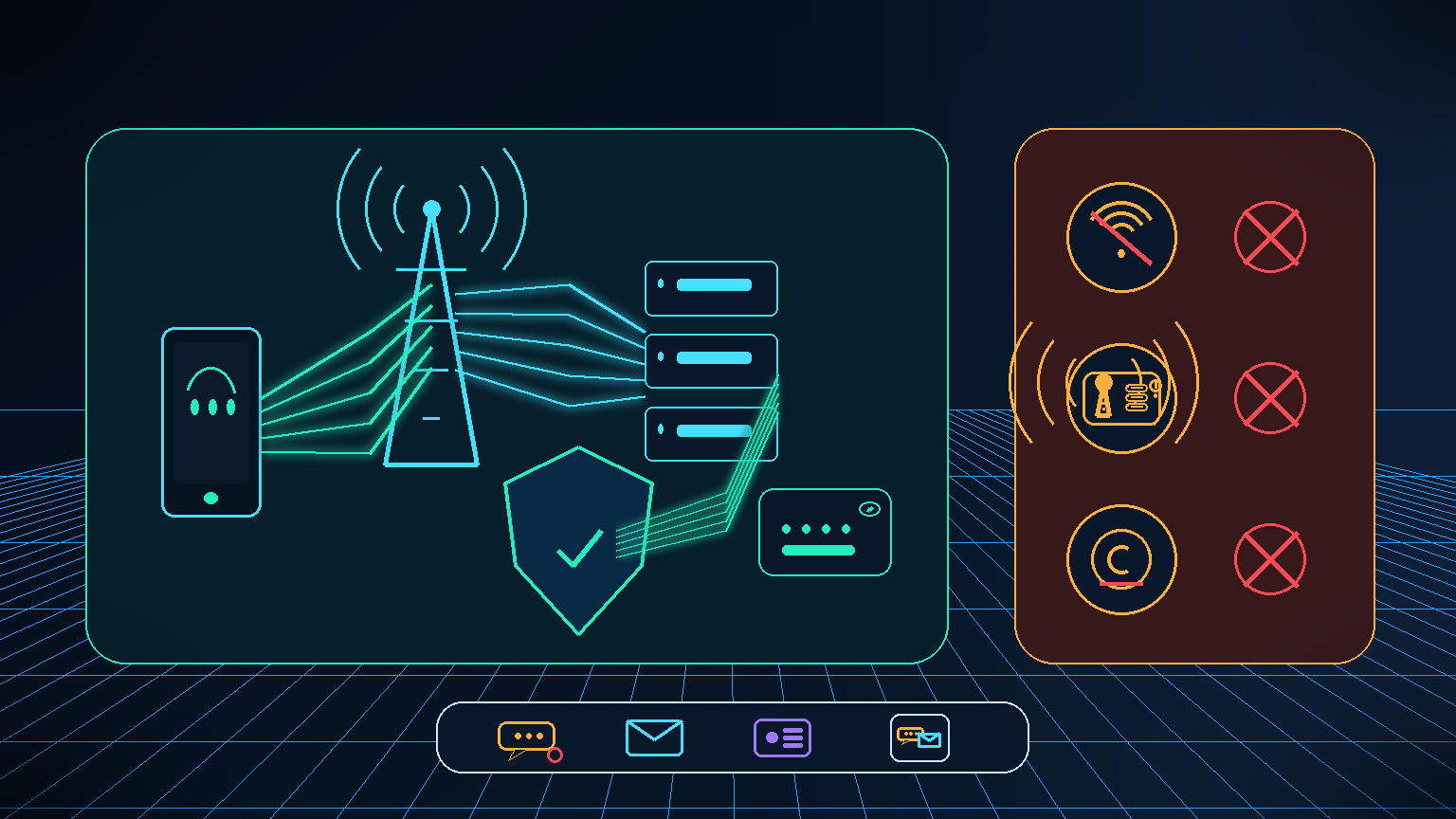
Silent auth can fail in three ways. All three need to be handled in production.
The session is not on cellular data: the mechanism requires the operator to see the device's IP session. A handset connected to Wi-Fi with mobile data disabled is not visible to the GGSN/PGW and produces no silent-auth signal. The relying party sees a timeout or an explicit failure code and must fall back.
The operator does not support the API: the authorisation-server role has to be filled by the subscriber's home operator, not a third party. Not every operator hosts one. Where operators do host one, aggregators can proxy the request but they cannot substitute for the authorisation server itself, because only the home operator sees the IMS registration state. Subscribers on MVNOs, in roaming, or on smaller carriers produce no signal.
An active IMS registration is required: the device must be currently registered with the IMS core. Recent handovers, coverage gaps, power-saving sleep states, and certain VoWiFi-only configurations can cause the IMS registration to lapse. The authorisation server, asked to issue a token for a subscriber whose IMS registration has expired, will refuse.
The accurate population to report when describing silent auth is not "success rate" but a three-column breakdown: how many requests produced a verdict, of those how many were positive verdicts, and what the fall-through path looked like for the rest. A single "97 percent success" number usually compresses one of those three columns out of view.
Why licensed-operator status is load-bearing
Silent auth is a three-legged exchange: the application, the operator-side authorisation server, and the device's active network registration. If one leg is missing the exchange collapses. An aggregator building a silent-auth product has to federate across many operator-side authorisation servers, each with its own integration depth, and it cannot operate the authorisation server on behalf of a subscriber whose home operator has not deployed one.
A licensed operator can. The licensed operator is already the home operator for its subscribers, already runs the Authentication Centre and the HSS, and can expose the authorisation-server role on its own signalling footprint. The closure of the loop, from the application to the authorisation server to the home operator to the device IMS registration and back, happens inside a single licensed entity's infrastructure. That is the reason aggregators cannot promise what licensed operators can on their own subscribers.
Operator-hosted silent auth is not automatically better than aggregator-mediated silent auth in every dimension. The difference is fewer intermediaries and fewer failure points, but only for subscribers on the home network. Outside the home network, any silent-auth product, operator-hosted or aggregator-federated, is limited by the destination operator's support.
Where federation sits in 2026
The industry has known about the single-operator limit since silent auth was first standardised under Mobile Connect. The current answer is federation via CAMARA Network Authentication APIs, backed by GSMA Open Gateway. 3GPP's Common API Framework, combined with OpenID Connect, is the authentication plane that permits one operator's authorisation decision to be trusted by another operator's API gateway. The specification work is done. The integrations are partial.
What has been demonstrated in 5G testbeds, including work using Nokia's Network-as-Code platform to trigger Quality-on-Demand API calls across operator boundaries, is that the CAPIF + OIDC pattern carries identity claims across MNO boundaries with adequate round-trip performance for synchronous authentication flows. What has not been demonstrated is uniform production deployment. At the time of writing, CAMARA Number Verification is available from a list of operators that changes by month, by country, and by whether the subscriber is roaming.
For a relying party, the practical implication is that silent auth in 2026 is a single-operator primitive plus a federation layer in progress plus a fallback. The product surface should reflect all three.
The attack surface is not zero
"Silent" does not mean "invincible." Independent research has documented impersonation attacks against one-tap authentication flows in Chinese MNO deployments, targeting nearly all Android, iOS, and HarmonyOS applications tested across three major MNOs. The attack class exploits weaknesses in the client-side authentication flow, specifically in how the application validates the token it receives back from the operator and in how the runtime environment is attested.
The paper's specifics are worth reading for anyone integrating silent auth. At the level of product positioning, three observations matter.
First, a silent-auth deployment is secure because the token validation, the runtime-environment checks, and the operator-side integration are each implemented correctly, not because the protocol is silent. The "silent" part is a user-experience property rather than a security property.
Second, the attack surface that silent auth eliminates is the SMS interception surface. SMS as a second factor has long-known weaknesses at the SS7 signalling layer, at the Diameter layer on LTE, and at the device endpoint when malicious applications hold READ_SMS permission. Silent auth removes SMS from the loop and therefore removes those specific risks. It does not remove every risk in the broader authentication threat model.
Third, operator-hosted silent auth lets the operator implement server-side mitigations: binding tokens to signed device attestations, enforcing strict audience scopes, and refusing requests from runtimes that fail attestation. These mitigations exist on a deployment-by-deployment basis and should be an explicit part of the product description rather than an assumed default.
How TensorAuth ships silent auth
TensorAuth silent auth is available on the subscribers Tensormobile serves as the home operator and on partner networks where CAMARA Number Verification is federated. Integration is through an OpenID Connect flow. The relying party initiates authorisation. The Tensormobile authorisation server resolves the source IMS registration. If the registration is active and the MSISDN matches the claim, an ID token is issued. If any leg of the exchange fails, a machine-readable reason code is returned so the integrator can choose the fallback path without guessing.
The fall-through rate is published by region and by operator on the TensorAuth status page. A single blended success rate across all integrations is not published, because that number would obscure precisely the information an integrator needs to size their fallback infrastructure.
The framing on the product page is specific: silent authentication is a network-level confirmation that a given MSISDN is registered on the device making a request, achieved by extending an authentication event the handset has already performed with the network. It eliminates the SMS channel from the verification loop. It works when the device is on mobile data, on a supported network, with an active IMS registration, and the home operator exposes the authorisation-server role. When any of those conditions fails, the application must fall back to another method (SMS OTP, email link, or a manual step). Silent auth removes the SMS interception surface from the cases where the protocol exchange completes. The blanket "silent auth works 100 percent of the time" claim is not supported by the literature and the product page does not make it.